Introduction
Morocco has successfully transitioned from a regional player to a critical node in global supply chains. By leveraging its strategic geographic position at the crossroads of Europe, Africa, and the Middle East, the country has cultivated a robust industrial ecosystem. Through sustained public investment in infrastructure and a proactive approach to trade liberalization, Morocco has become a preferred destination for international companies seeking to diversify their manufacturing bases and secure resilient supply lines.
The nation’s economic strategy, characterized by long-term industrial planning and a commitment to export-driven growth, has yielded significant results. As global manufacturing undergoes a period of geographic diversification, Morocco is increasingly recognized as a stable, competitive, and high-value-added hub for sectors ranging from automotive and aeronautics to renewable energy and advanced manufacturing.
Quick Answer
Morocco occupies a strategic position in global supply chains as a high-value-added manufacturing hub, particularly in the automotive, aeronautics, and renewable energy sectors. It serves as a competitive, near-shore production base for European and global markets, supported by world-class infrastructure and a stable, pro-business regulatory environment.
Market Overview
Morocco’s integration into global value chains is a result of decades of deliberate industrial policy. According to the 2024 OECD Economic Surveys, Morocco has successfully integrated into global value chains, with backward integration into supply chains exceeding the OECD average. The country has moved beyond basic assembly, progressively climbing the value chain to include complex manufacturing and R&D activities.
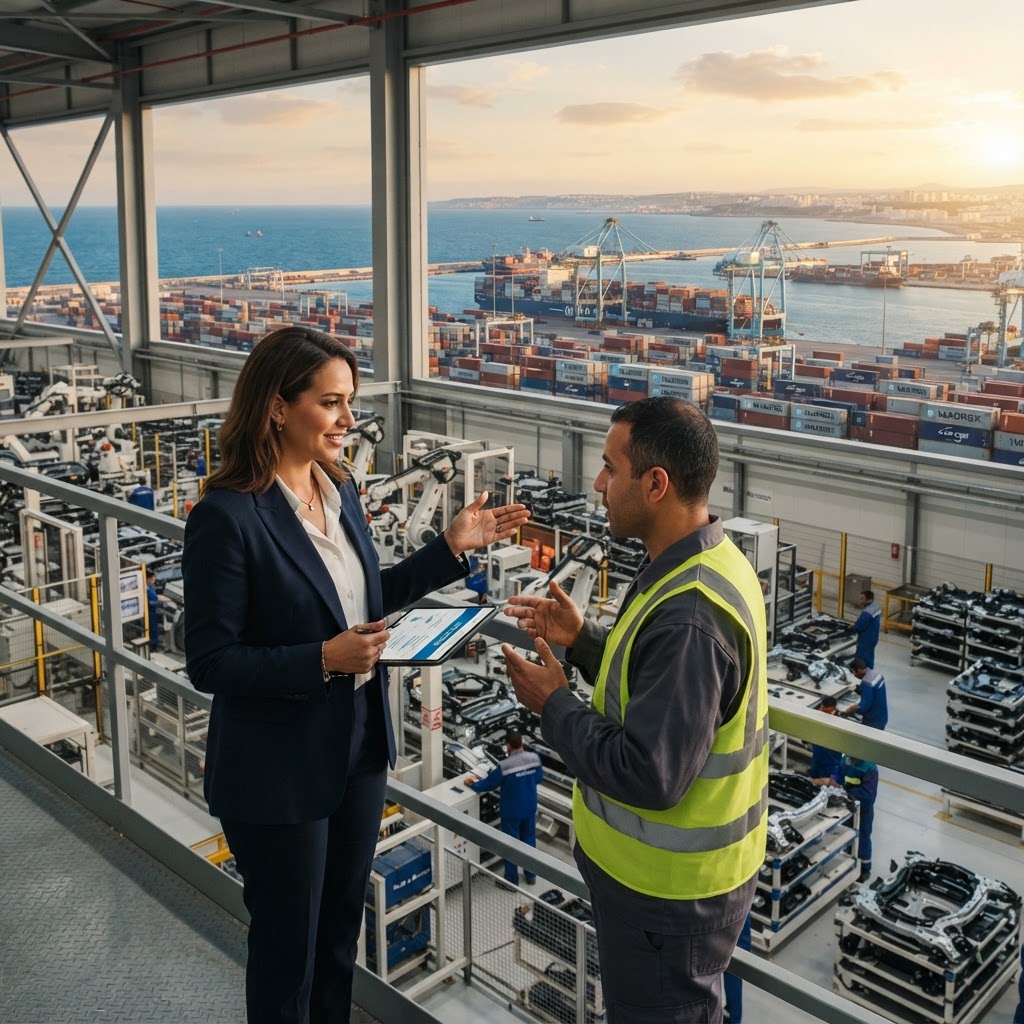
The automotive sector stands as a primary pillar of this industrial success. With over 260 automotive factories operating in the country by 2023, Morocco has cemented its status as a major car exporter. This industrial momentum is now expanding into the electric vehicle (EV) battery value chain, with Morocco identified by UNCTAD in its 2026 World Investment Report as a leading destination for international investment in this space.
Why It Matters to Investors
For foreign investors, Morocco offers a unique value proposition: the combination of proximity to European markets, competitive labor costs, and a sophisticated logistics network. The country’s ability to maintain a goods trade surplus—which reached 3.4 billion in 2024—underscores its efficiency as an export platform. Furthermore, Morocco’s political stability and commitment to structural reforms provide a predictable environment for long-term capital deployment.
Opportunities
Investors are currently focusing on several high-growth areas:
- Electric Vehicles and Batteries: Leveraging Morocco’s large reserves of phosphates, which are essential for battery production.
- Renewable Energy: Capitalizing on the country’s massive potential in green hydrogen and solar power to fuel industrial processes.
- Aeronautics: Building on an established ecosystem of high-precision manufacturing.
- Logistics and Infrastructure: Supporting the expansion of industrial zones and port connectivity.
Locations
Industrial activity is concentrated in specialized zones designed to facilitate export-oriented manufacturing:
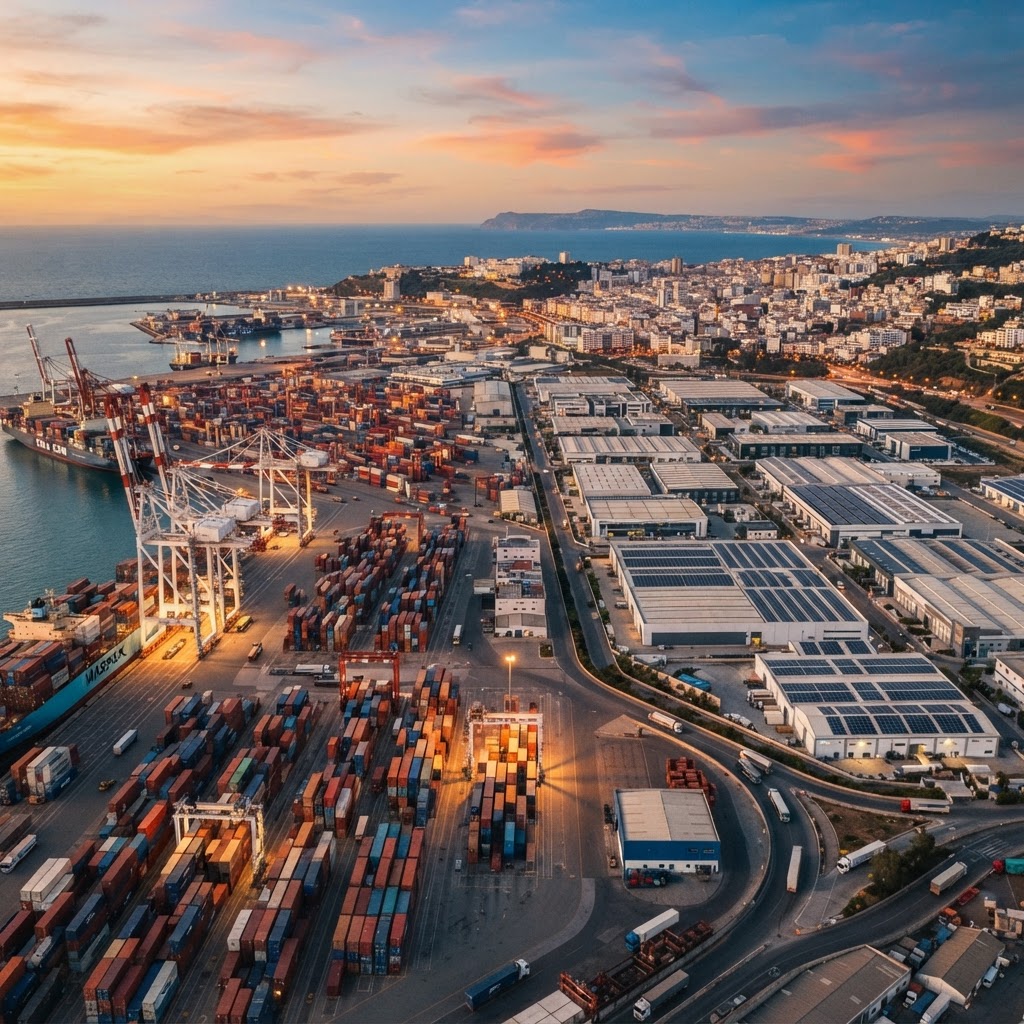
- Tangier Med: A world-class port and industrial complex that serves as the primary gateway for Moroccan exports to Europe and beyond.
- Kenitra: A major hub for the automotive industry, hosting significant international manufacturing plants.
- Casablanca: The economic heart of the country, housing diverse industrial, financial, and service-oriented sectors.
- Rabat-Salé-Kénitra Region: A growing center for high-tech and industrial investment.
Infrastructure and Workforce
Morocco’s infrastructure is a cornerstone of its competitive advantage. The state has channeled substantial resources into highways, rail networks, airports, and telecommunications to ensure seamless connectivity. The workforce is increasingly skilled, with specialized training programs aligned with the needs of the automotive, aeronautics, and digital sectors, helping to bridge the gap between education and industrial requirements.
Incentives and Regulations
The Moroccan government actively facilitates foreign investment through the Investment Charter and various regional programs. These frameworks provide a range of incentives, including potential tax exemptions, subsidies for land acquisition, and support for training costs. Regulations are designed to be transparent and investor-friendly, though prospective investors should always conduct a thorough review of specific sector requirements. For personalized guidance on navigating these opportunities, you may submit an enquiry to our team.
Risks and Challenges
While the investment climate is positive, investors should remain mindful of potential challenges. These include the need for continued productivity gains, the management of water resources in the face of climate variability, and the necessity of navigating complex administrative procedures. As with any emerging market, success requires a deep understanding of local business practices and a long-term commitment to the region.
Sources
- AMDIE (Moroccan Agency for Investment and Export Development)
- OECD Economic Surveys: Morocco 2024
- UNCTAD World Investment Report 2026
- U.S. Department of State: 2025 Morocco Investment Climate Statement
- Bank Al-Maghrib
- Office des Changes
Planning an Investment in Morocco?
InvestMorocco.ai supports investors, companies and project developers with market intelligence, feasibility, market entry, site selection, local partnerships, supplier sourcing and investment project support across Morocco.
Discuss your project: