
Introduction
Morocco has strategically positioned itself as a premier gateway between Europe, the Middle East, and sub-Saharan Africa. By leveraging its unique geographic location, political stability, and a robust network of trade agreements, the Kingdom has evolved from a regional manufacturing base into a sophisticated hub for international companies looking to scale their operations across the African continent.
For foreign investors, Morocco offers more than just proximity; it provides a stable, rules-based environment that bridges diverse markets. As global supply chains shift toward regionalization, Morocco’s role as a launchpad for African expansion has become increasingly central to corporate growth strategies.
Quick Answer
Morocco serves African markets by acting as a stable, high-connectivity logistics and manufacturing hub that leverages the African Continental Free Trade Area (AfCFTA) and extensive regional trade networks. Investors utilize Morocco’s world-class infrastructure, such as the Tanger Med port and Casablanca Finance City, to manage regional operations, export value-added goods, and access a growing market of over 1 billion consumers.
Market Overview
Morocco’s economic strategy is built on the integration of industrial platforms with global trade corridors. As of 2024, Morocco remains one of the top economies in Africa, characterized by a diversified industrial base that includes automotive, aerospace, renewable energy, and high-end outsourcing services. The country’s commitment to trade liberalization is evidenced by its participation in the AfCFTA, which aims to create a single market for goods and services across the continent.
Why It Matters to Investors
Investors choose Morocco to mitigate the risks often associated with emerging market entry. The country provides a "de-risked" environment through its legal framework, which is increasingly aligned with international standards. By establishing a regional headquarters or manufacturing facility in Morocco, companies can benefit from:
- Political Stability: A consistent policy environment that encourages long-term capital commitment.
- Strategic Connectivity: Unrivaled access to both Mediterranean and Atlantic shipping routes.
- Institutional Support: Dedicated agencies like AMDIE provide structured support for foreign direct investment (FDI).
Opportunities
The opportunities for investors are concentrated in sectors where Morocco has developed a competitive advantage. These include:
- Manufacturing: Leveraging industrial zones to produce goods for the African market with lower logistics costs.
- Financial Services: Utilizing Casablanca Finance City (CFC) as a base for regional financial operations and holding structures.
- Renewable Energy: Morocco’s leadership in solar and wind energy provides a sustainable power base for energy-intensive industries.
- Agro-food and Pharmaceuticals: High-growth sectors where Morocco is expanding its regional export footprint.
Locations
Key industrial and business hubs include:
- Casablanca: The primary business and financial center, home to the Casablanca Finance City (CFC).
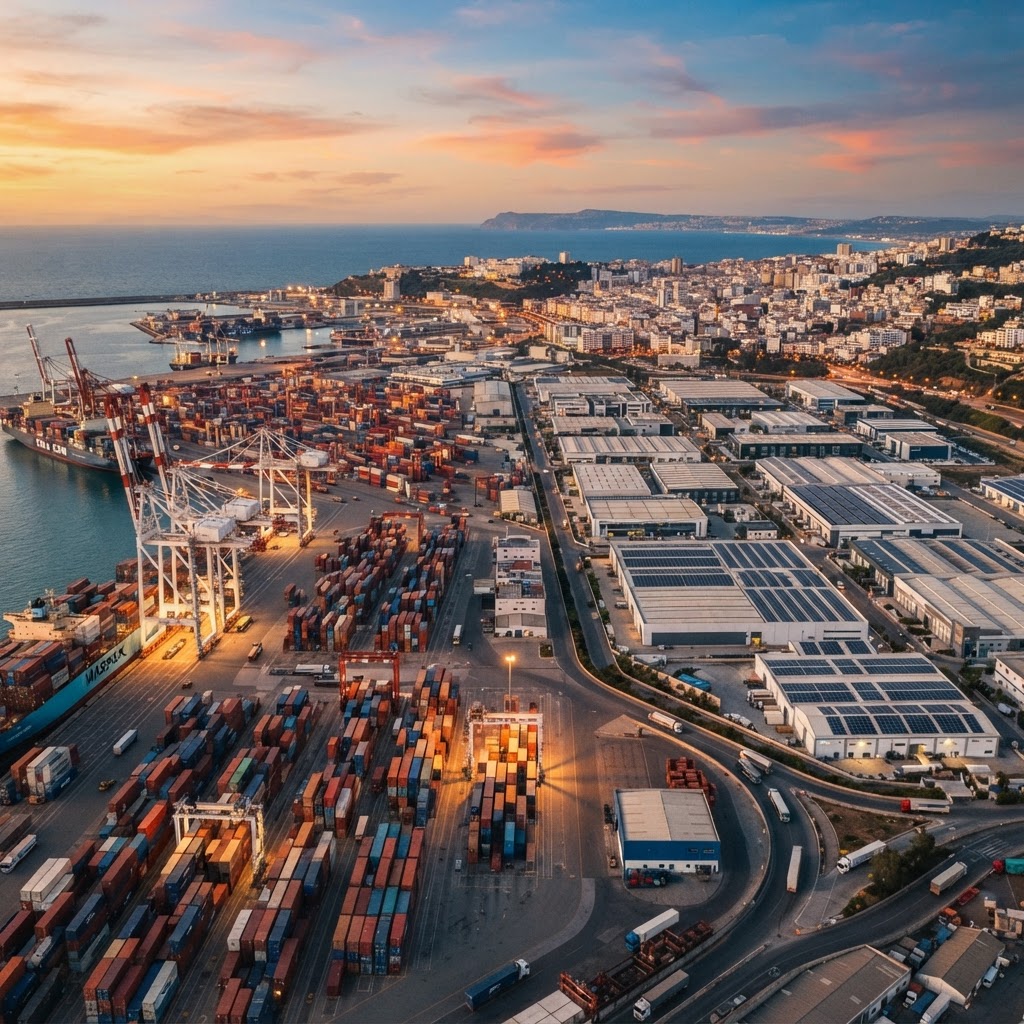
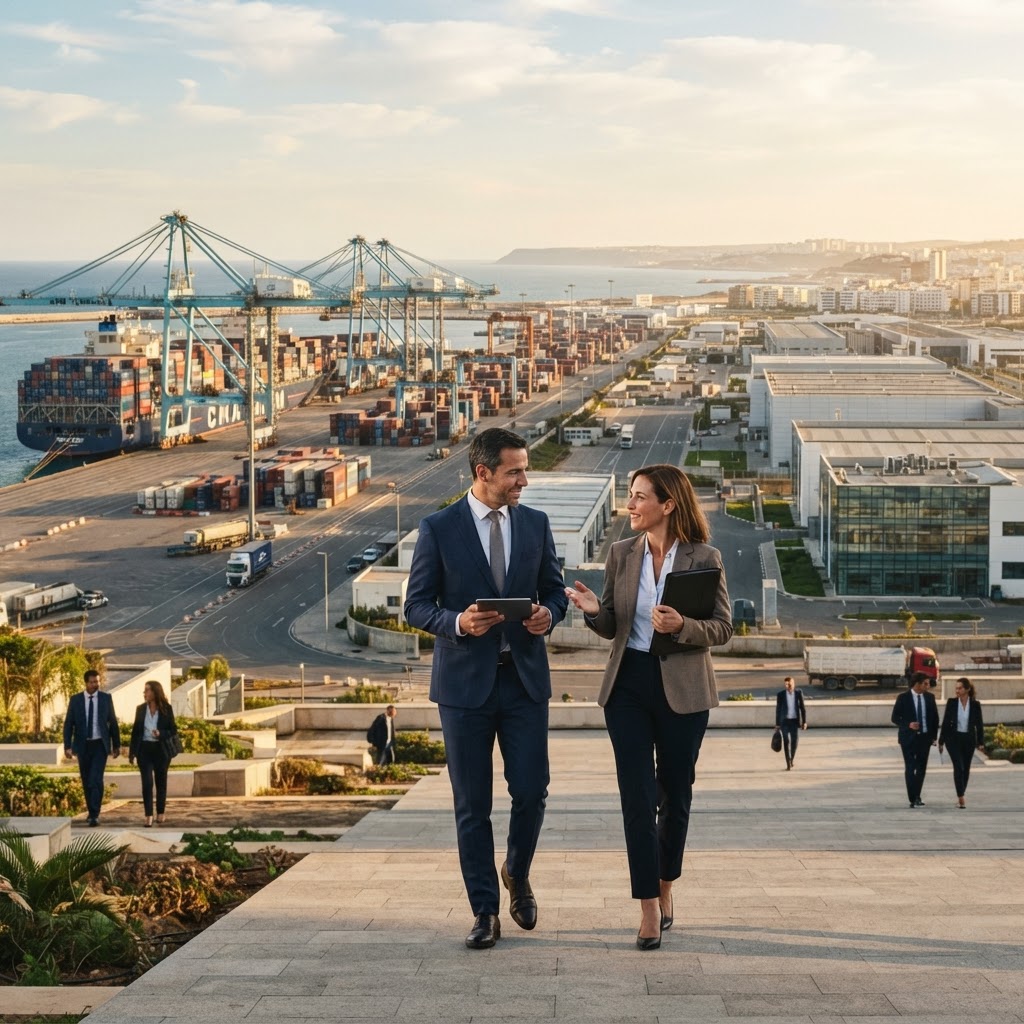
- Tanger Med: A world-class port complex that serves as a critical node for global and regional maritime trade.
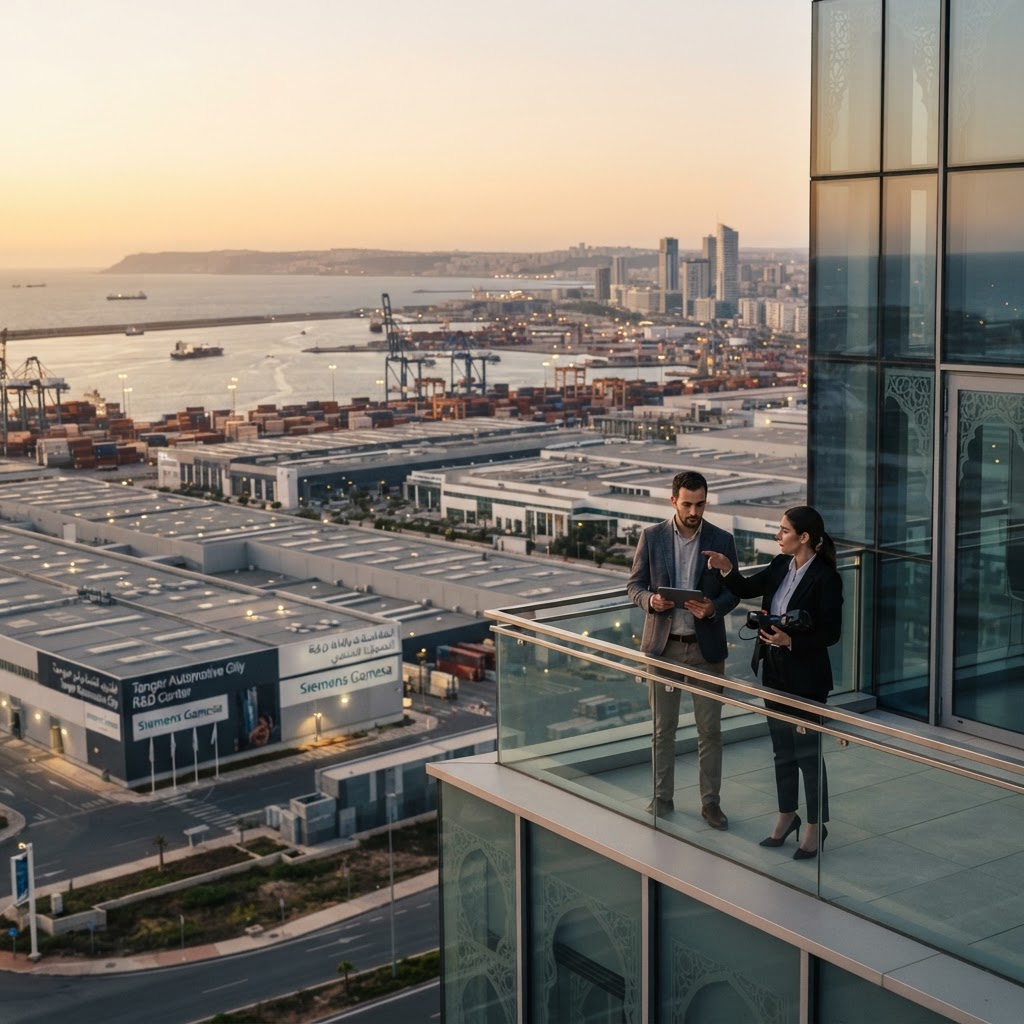
- Kenitra and Tangier: Major hubs for automotive and industrial manufacturing.
Incentives and Regulations
The Investment Charter (Framework Law No. 03-22), enacted in December 2022, represents a significant shift toward a more incentive-driven investment climate. It provides a clear framework for strategic projects, offering potential support for land acquisition, infrastructure development, and tax incentives. Investors are encouraged to review the specific criteria for "strategic project" status, which is managed by the National Investment Commission.
Risks and Challenges
While Morocco offers a stable environment, investors should conduct thorough due diligence regarding:
- Regulatory Complexity: Navigating local administrative procedures requires professional guidance.
- Market Fragmentation: While the AfCFTA is in force, intra-African trade still faces logistical and regulatory hurdles that vary by country.
- Workforce Development: While the labor pool is growing, specific high-tech skill sets may require internal training programs.
For personalized guidance on navigating these factors, you can submit an enquiry to our team.
Sources
- AMDIE (Moroccan Agency for Investment and Export Development)
- Morocco Now
- World Bank
- OECD
- Office des Changes
- WTO (Regional Trade Agreements Database)
Planning an Investment in Morocco?
InvestMorocco.ai supports investors, companies and project developers with market intelligence, feasibility, market entry, site selection, local partnerships, supplier sourcing and investment project support across Morocco.
Discuss your project: